Monday, October 28, 2013

Can you SOAP a writing project?

Most people realize the medical profession is filled with lingo. Acronyms, vocab, cool-sounding abbreviations - us vets (MDs, too) love that stuff.
These tools make writing medical notes and prescriptions efficient and succinct. One acronym used frequently is SOAP. This is a tool used to make the process of examination and diagnosis more organized.

Standing for Subjective, Objective, Assessment, and Plan, "SOAPing" a patient is really what all doctors do mentally during and after an examination - this is just a way of writing it down in the medical file.

Subjective means just that - what are your subjective (unmeasureable) physical exam findings? Common terms to use here are BAR (bright, alert, responsive) or depressed.

Objective is where you record your measurements, such as heart rate, temperature, even bloodwork values.

Once you've gathered your S and O during the physical, you use these findings for A: Assessment. This is essentially when you put all the pieces together and formulate a working diagnosis list. Is George the 15 year old cat quiet and depressed, with no appetite, losing weight (only 7 lbs), with kidney values elevated on bloodwork? Your assessment might include chronic renal failure.
Poor George
P is for Plan. This is what you're actually going to do for the patient. This can include more diagnostics, medication, surgery - what are your next steps?

As I was thinking about SOAP the other day, I began to wonder if this type of planned thinking could apply to the sometimes seemingly chaotic world of creative writing. Can one SOAP a writing project?

Let's see...

Subjective: perhaps this would be how a character feels. Is your antagonist bitter? Vengeful? Sadistic? Rude? Totally clueless?

Objective: maybe this would be what actually happens in the story. Does your protagonist get hit by a car, fall into a coma, then wake up not even remembering her own name? Does the ship at sea wreck on the shoals of a coral reef and the survivors are forced to swim to a leper colony? Does the spaceship abduct the wrong person and make completely incorrect assumptions about the human race based on this bigot's behaviors and answers during interrogation?
Insert plot here
Assessment: Where are you going with the story? What do you want to accomplish with it? I see this as sort of a writer's "check in" as the story starts to fill out. You know how sometimes you set off writing the most brilliant piece ever imagined by a human brain but once the heat of the moment cools off you suddenly find yourself 5700 words in and then wonder what the hell is happening? Not that that's ever happened to me... But, preferably before that happens in a story, a writer could probably benefit from a step back to scrutinize the project and make sure it's going the direction he/she originally intended.

Plan: OK, we're in the home stretch. Perhaps the P in Plan could represent how you're going to wrap everything up. Don't forget about the blind daughter of the store clerk you mentioned in chapter two. And recall that the protagonist's best friend has a birthday in two weeks; surely that needs to fit in somewhere. Another way to see the P is like this: what is your plan after you've finished writing? Is this a novel that needs an agent or an article you need to query for a magazine? Basically, what needs to happen to this piece to get it to where you want it to be?

Maybe I've just answered my own question. It appears it is possible to SOAP a writing project. Maybe it would even be helpful, especially for us more scatter-brained writers who claim we are simply free spirits with our creativity, but in the end all that really means is there are Post-It notes all over the walls and half-filled notebooks threatening to bury the cat. Yes, perhaps SOAPing my next project could prevent the wall of papers from caving in on me, thereby saving my life. Maybe SOAPing could save YOUR life. If it does, you're welcome.
Shhhhh, she's being creative


Wednesday, October 23, 2013

Weekly Wags

I'd like to offer some Weekly Wags to stuff (news, photos, information, laughs, general mayhem and tomfoolery) I've found while scrounging around on the internet.  Not sure if this will become a permanent fixture here at VetWrite, but let's give it a try.  Stuff will usually revolve around animal stuff and writer-ly things.  Go figure.  Here we go!

1. Washington International Horse Show!

This exciting equestrian event is this week at the Verizon Center in Washington, DC (October 22 - 27).  We went last year on Thursday night, which is Barn Night and Gambler's Choice, where different jumps are assigned varying point values and riders pick jumps to accumulate as many points as possible within the time limit. This year we have tickets for Friday night which is the Puissance competition - horses and riders face the Great Wall as it gets higher and higher and only one pair remains without knocking it down.  The height to beat is 7 feet 7.5 inches, set in 1986.


2. Brides Throwing Cats Tumblr


OK, don't worry, it's all Photoshopped, but hilarious - a creative Tumblr account replacing bouquets with cats. Brilliant!


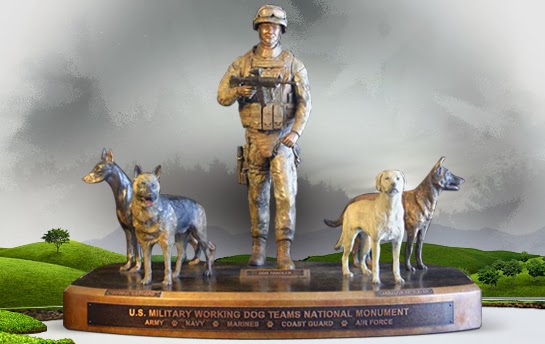
3. US Military Working Dogs Team National Monument 

On October 28, the very first national monument for animals will be dedicated in San Antonio, Texas. 


4. Travels with Charley by John Steinbeck

Steinbeck with his endearing French Poodle Charley
Route of travel
The truck and camper Steinbeck traveled in, lovingly called "Rocinante"


I just finished this book and I loved it.  In September, 1960, Steinbeck took a drive across the US to "discover America." He was alone save for his faithful canine companion, Charley. Filled with delightful vignettes on Steinbeck's encounters with locals, traffic, and bears (!), this book was a surprise delight for me. Next up, The Grapes of Wrath (no, I haven't read it, don't judge.)


5. Dog sweaters. Argyle sweaters.


Because winter is right around the corner.

Monday, October 7, 2013

Stormy Weather Makes Me Read Poe or How Weather Affects What We Read

I am very aware that the seasons dictate what I read. Just as a cup of hot soup is desireable on a blustery, gray November, I find that heavier, meatier books are on my palate in late fall and through the winter.
Not exactly what I meant when I said "meaty book"
I can't be the only one who has different tastes in books as dictated by the seasonal tilt of the earth. My prime example to back this up is the vernal appearance of "summer reads" in the bookstores when May rolls around.  And don't these summer reads usually fall toward the lighter end of the literary spectrum, perhaps some not even falling in the "lit" category at all?

Although October here has been unseasonable warm as of late, the abundance of pumpkins, squash, and mums in the stores and on lawns is starting to put me in the autumn mindset and when the crisp fall weather eventually does hit, I'll be turning my sights on the ever-reliable Edgar Allan Poe. I also have the book The Woman in Black by Susan Hill, given to me a few years ago by my mom, the eternal sucker for ghost stories set in Great Britain. It's never seemed like the right time to read the book until now, so as of today, it's in my stack of to-reads on my nightstand (a towering, sometimes precarious stack, I assure you. It may crush me in my sleep one night.)
Mark my words - this is the cause of my death
As winter comes around, I'll be turning my eyes on a few books I have about JFK. There's just something morally wrong to me about reading the weighty tome The Day JFK Was Shot on a sunny June afternoon. No, the likes of that will wait until January or February.

My beloved adventure books, in contrast, are all set for summer reading. This includes some of Jon Krauker's books (with the exception of Into Thin Air), Bill Bryson, and my new infatuation of reading about Carter's discovery of King Tut's tomb (I have my eye on the 2012 book on this).

And then that brings me back to fall. Of course, I don't want to mislead you into thinking I have all my books planned for the next year. There are certainly hordes of books ideal for reading any time of year. Margaret Atwood falls in this category. Of course. Many other works of fiction fit 'round the calendar as well. Except Salman Rushdie. No, he's a winter read for me for sure.
They are reading Salman Rushie, I'm sure of it.
What about you? Anyone else have seasonal tastes that influence their reading repertoire?

Tuesday, October 1, 2013

A Book Lender's Dilemma

It's no secret that I love books.  I love to read them, buy them, talk about them, gaze at them, smell them, and share my love of them with others.  But when it comes to sharing actual books, I'm hesitant, even reluctant to pass on one of my beloved books into the hands of someone else.  I've been burned before in the Great Book Borrow.  And once burned, twice unwilling to ever ever ever lend you a book again.  Or so the saying goes.


I suppose in the course of one's life, one slowly learns who is reliable and who is not.  My dad, for example is reliable.  When he borrows a book, he reads it at once and returns it promptly.  Just last weekend, I dropped off in the continuous O'Brien Book Swap both Laura Hillenbrand's Seabiscuit and Mike Mullane's astronaut memoir Riding Rockets for Dad's reading pleasure.  I have no doubt they will be returned to me the next time Pops and I meet up. 

Best friends, on the other hand, sometimes prove to be not so reliable.  Take my best friend, Katie.  A few years ago I lent her my copy of Mary Roach's Packing for Mars.  I have yet to see it back.  I actually forgot I lent her the book (horror of horrors! Do I really have that many books now that I can't keep track if I'm missing one?!) until she casually mentioned it a few months ago.  As in, "Oh yeah, I still have that Mary Roach book you lent me...."  Great googly moogly, woman!  Send it back at once!

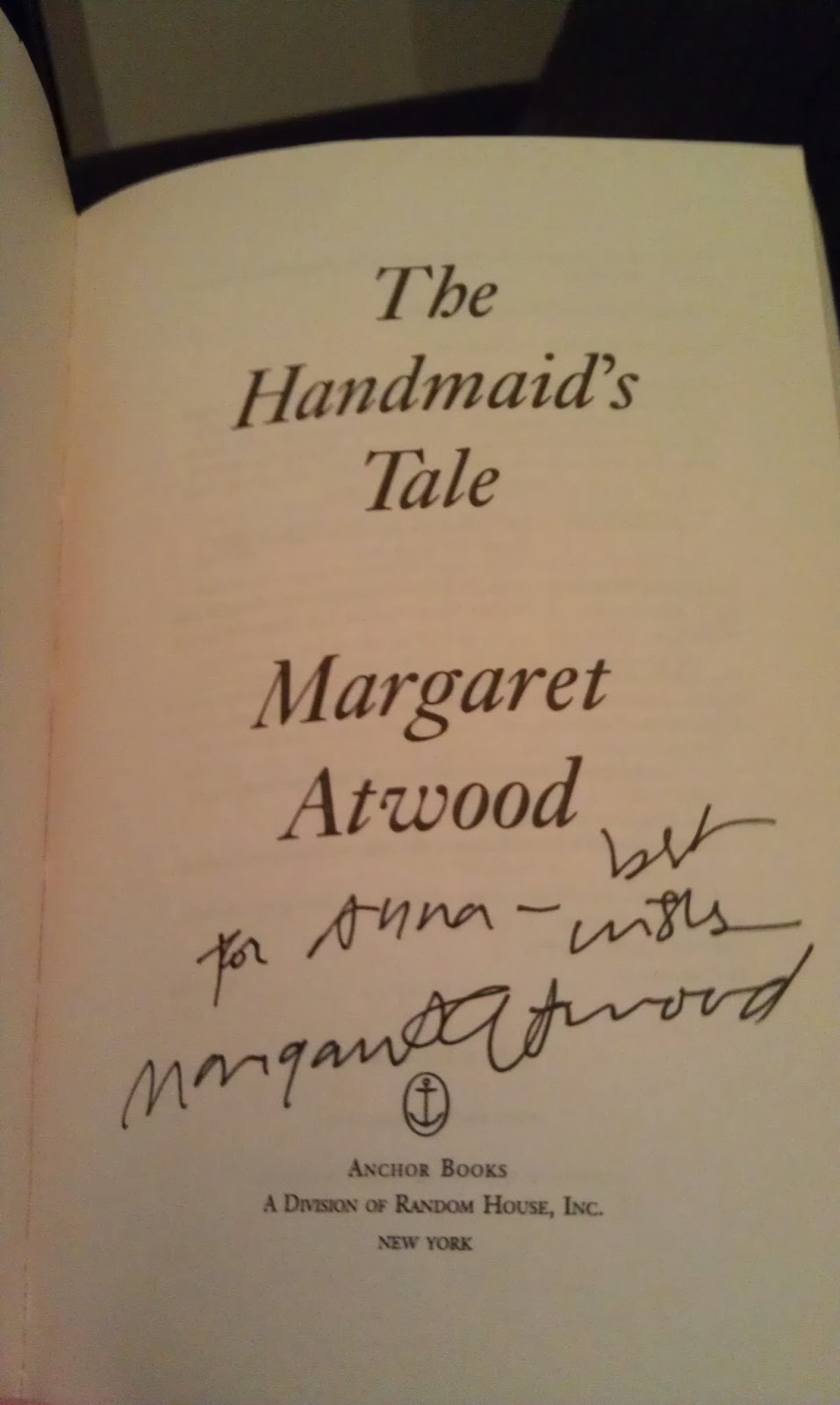
Another more alarming example is lending books to co-workers.  This is a very dangerous practice indeed.  There's a woman at work who shares some similar tastes in books with me.  Feeling a new rank of working friendship about to be leveled-up, I permitted myself to gush about Margaret Atwood to the co-worker, and offered to lend her my copy of The Handmaid's Tale.  My autographed copy.  I have no idea what I was thinking, lending such a beloved copy to a Wild Card.

Months went by.  I heard nothing.  I started to fret.  What if she lost it?  Did she even realize it was autographed?  How do I demand that it be returned at once? 

This is why in vet school you never lent out your thermometer, calculator, pen light, hoof pick, or dog leash to ANYONE.  NOT EVEN YOUR GRANDMOTHER.  Because once it leaves your hands, it's as good as gone.  This is also why in vet school, a very clever male clinician in the small animal hospital had a neon pink stethoscope.  The girliest, ugliest stethoscope you have ever seen.  No one wanted it, no one borrowed it.  He was safe. 
Way uglier than this. Words can't even describe.
After about six months without a word on my Atwood book, I finally had enough.  I sent an email.  You would be proud; it was a polite email.  No hint of my seething rage crept into a simple declarative statement: just wondering if you still had my book...... 

Thankfully, she did still have it and after the email, she returned it promptly.  Unread.  She was keeping it hostage and hadn't even read it!  The NERVE. 

The reverse situation is that I'm a spastic book borrower.  I actually don't like borrowing other people's books.  No, thanks, I'll just get it at the library.  There's a lot of stress, you see, in reading someone else's book.  I need to read it NOW.  Just get through it and return it!  Get it out of my hands!  What if I lose it?  Bend it?  Spill something on it?  Great kitten whiskers, was the binding that knackered when she gave it to me?  Was that page originally dog-eared? 
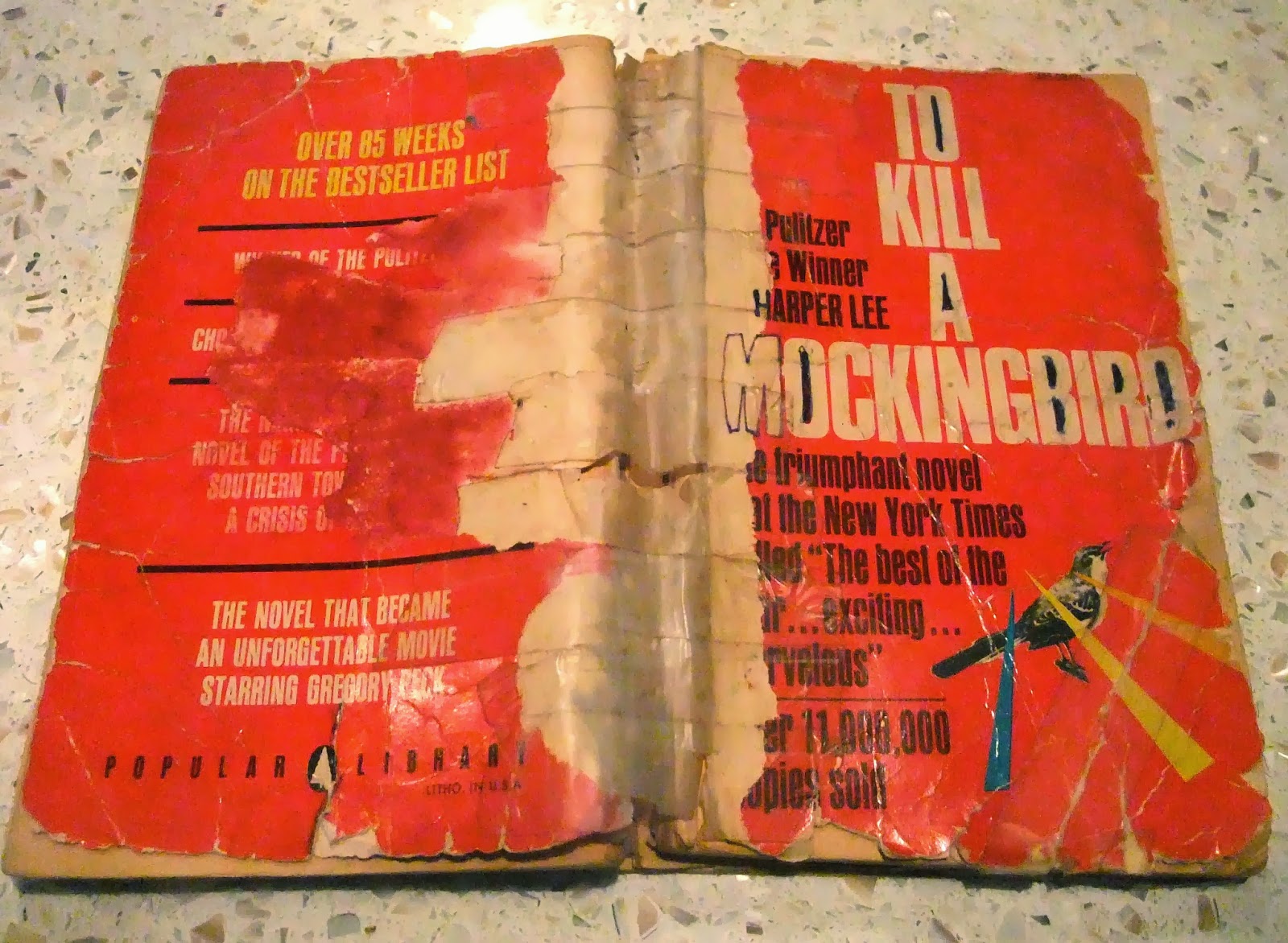
I swear to god, it looked like this when you gave it to me!!!
To de-bunk the popularized slogan "Sharing is Caring", I say NO.  Sharing books is instead a practice that has the potential to break apart best friends and get one fired for workplace violence.  Perhaps I would make a terrible librarian.

So the answer is no, you cannot borrow my copy of The Silence of the Lambs or Mockingjay.  Oh, and you can't borrow my stethoscope either. 


Tuesday, September 24, 2013

O Authors, My Authors

I feel it's only right in a blog that is loosely centered around writing to include somewhere a shrine to my favorite authors.  Even more reason to broach this topic right now is the fact that this has been a stupendous year for some of my authors (yes, I call them my authors), with some of them having new books released.  So, without further ado, I give you my most adored writers:

1. Margaret Atwood
2. Mary Roach
3. Karen Russell
4. Joyce Carol Oates
5. Laura Hillenbrand

My first introduction to Margaret Atwood was as a freshman in college.  A friend introduced me to The Handmaid's Tale, Atwood's unbeatable dystopian novel.  From there, I was hooked. 


I got to meet Margaret Atwood once - a dream come true.  She was in DC a few years ago, promoting her book The Year of the Flood.  After a stage performance of a chapter from the book, I anxiously lined up for autographs.  I had her sign my beloved and well-read copy of The Handmaid's Tale, and it looks like this:


I re-read this book about every two or three years.  I think I'm about due. 

The thing about Maggie (sometimes I call her that) is her prose is so vivid but sometimes harsh in its brevity.  Somehow she maintains that delicate balance of description and succinctness that alludes me at all times.  If you're reading this Maggie, I love you.

I discovered Mary Roach when she published her first book: Stiff, the Curious Lives of Human Cadavers.  This woman's ability to sink her teeth into the bizarre and come out with something that is both enlightening and hilarious is so wonderful.  Writing non-fiction, her journalistic skills make for great reading.  I remember reading her book Spook on a flight from vet school to home for Christmas vacation and stifling laughs as she described struggling to pull out a specimen of "ectoplasm" in the basement of a library. 

The thing about Mary is although she's entertaining and her subjects border on preposterous, her sense of scientific curiosity keeps the books moving forward.  She's not just writing to write weirdo stuff.  She's writing because she wants to know more. 

Karen Russell is my most recent edition to Anna's Top Authors.  I read her debut novel Swamplandia! in February.  It was her second collection of short stories, though, that really blew me away.  Vampires in the Lemon Grove came out this year and hang on to your hats, kids, because this girl can write. 


The thing about Karen is the creativity packed in her short stories is unbridled yet honed to a sharp point.  The Barn at the End of our Term is my favorite of her short stories so far and I look to her stories for guidance as I struggle with my own.

Ah, Joyce Carol Oates.  You are a staple to any reader worth his/her salt when it comes to 20th and 21st century American literature.  I remember first seeing JCO's novel Blonde in the window of a bookstore in Covent Gardens, London.  A perennial fan of Marilyn Monroe, it caught my eye but it wasn't until sophomore year in an undergrad fiction class when we read a short story by JCO that I connected the dots.  Unlike my other favorite authors, I haven't yet read all of JCO's works (my god, that woman is a prolific writer!) but I'm slowly working toward that goal. 


Last but not least is the lovely Laura Hillenbrand.  Like any good horse lover, I dutifully read Seabiscuit which I probably would have enjoyed even if it was poorly written (which it's not).  The second time around, Laura's next book Unbroken confirmed in my mind what an engaging writer she is. 

Like Mary Roach, Laura tackles non-fiction, and has somehow dug up amazing stories left almost forgotten in history.  Piecing together interviews and research, Laura manages to piece together stories that read like water tight thrillers only better because they actually happened.  Oh, and to add to Laura's amazingness?  She suffers from chronic fatigue syndrome.  That's right - nearly paralyzed by exhaustion in bed, she still managed to put together not one but two New York Times bestsellers.  *commence standing ovation*

So there you have it for the record: my favorite author manifesto.  Which leads me to ask: who are your favorites?


Thursday, August 29, 2013

Professional relationships Or: Always tell someone she has manure on her face

In vet med, we have what's called the veterinarian-client-patient relationship (or VCPR for short).  This is exactly what its long-winded name describes - the bubble that contains your vet, your pet, and you and it is necessary in order for your vet to properly assess your pet, make a diagnosis, and start treatment.  It exists a lot in part to prevent folks from diagnosing disease over the phone (or over the internet) for an animal he/she has never ever seen.  It helps ensure your vet is familiar with your pet's medical history and in many states, a VCPR is legally required for a veterinarian to diagnose and dispense medication. 

What this VCPR looks like differs between vets and between clients. There's a different bubble for everyone. For many small animal practitioners, the bubble exists in the exam room while he/she flips through your pet's records, asks you questions about medical history, and then proceeds with the physical exam.  For large animal practitioners, the bubble exists on the farm while he/she asks the farmer about how he manages his herd, looks at the herd and facilities, and, if lucky, drinks some lemonade or has a cookie that's been brought out by a family member.

Take note: the best clients are those who serve food and drink
These are professional relationships that exist to benefit and protect the animal.  But it's true that some clients become good friends with their vets.  And that's totally fine.  We should enjoy our jobs and be friendly with people when we can.  This got me thinking about professional relationships in the writing world and that naturally led me down the path of the writer-literary agent relationship.

Now, reader be warned, the rest of what you are about to read is pure speculation.  I do not currently have an agent (if you know of one who'd like to represent an awesome, brilliant, creative, hilarious, insightful, industrious, beautiful, and humble aspiring novel writer, please send them my way....).  I'm just imaging what I'd like my working relationship with an agent to be like, and this vision is probably WAY off because, for starters, it's based on what I've seen on TV.

Basically, I'd like an agent-writer relationship similar to the one in Showtime's Californication: Hank Moody (writer) and Charlie Runkle (agent).  Both characters of course have faults, actually numerous nasty faults, but their relationship is fun and self-deprecating.  They are best friends and through the trials and tribulations of everything that is the show, they work together.

Yup, just me and my agent, BFFs
However, I am aware that this is not usually how the whole writer-lit agent thing goes.  Numerous blogs tell me so.  And Twitter.  And magazine articles.  Something tells me most literary agents don't have the time to be a writer's best friend (so, you see it's merely a time thing, not a personal thing, right?).  I understand.  No really, I do.  Just like I don't have time to be BFFs with every single client of mine, right?

So....ok.  When I get one of my various writing projects to a point where I'm ready for representation I'll try to keep the VCPR in mind.  I won't expect anything above what I would normally provide in a VCPR.  But I will say this: there are clients out there who will tell you you have manure on your face and there are clients who won't.  I'm friends with most of the clients who tell me like it is and won't let me drive off their farm with a brown splat of who-knows-what (ok, we usually know what it is in my line of work) on my cheek or in my hair.  Some even help get it off.  I guess that's what I'd really like in a writer-literary agent relationship too.  Someone to call you on your shit and help you with it.  Is that too much to ask?


Monday, August 19, 2013

Update on the Book Club

I hinted in a blog a couple months ago that I was starting a book club at work.  Since then, I've held two meetings (we meet once a month) and am pleased to announce SUCCESS!
First let me say that I had purely selfish reasons for starting this club.  I've never been a member at any other book club and that's for the following reasons:

1. book clubs were never reading books I wanted to read
2. they seemed filled with old ladies with nothing better to do than psychoanalyze the many possible reasons why Charlotte Bronte chose to kill Mr. Rochester's crazy wife in a house fire.  Ug.

I'm sure I'm totally off base here, but this is pretty much what I envisioned a book club to be
And yet I really wanted to join a book club.  One of my most favorite-est things to do is discuss a book I've read with someone else (preferably who has also read the book).  So, in the spirit of "my way or the highway" I started my own club so I can secretly (or not so secretly) have control over the books we read.  Is that a little creepy?  No, don't tell me.

Creepiness aside, our first book was The Art of Racing in the Rain by Garth Stein.  It was great.  Most everyone in the group is a veterinarian or associated with vet med, so a book narrated by a dog was a big hit.  We laughed, we cried, we had a rollicking good time. 

Then onto the next month.  I sung the praises of Swamplandia!, by Karen Russell, which I read this past February.  Folks thought the premise of this novel sounded interesting (and who wouldn't: set in the Everglades in Florida in a failing gator-wrestling tourist attraction) and thus it was decided: Book #2.

I began hearing murmurings of dissent soon afterward.  Swamplandia! is a heavy read and putting it right after the fairly quick read of Stein's novel, it feels even more toilsome.  Even I'll admit that.  People were complaining.  They said they couldn't finish it in time.  They didn't like it.  It was too depressing.  I was fearing rebellion.

This is where I learned Book Club Lesson #1: not everyone has to like every book all the time. 

As a colleague who is not in the Book Club but was listening to my concerns of burning pitchforks said: "They'll get over it.  It'll be good for them."  And she was right.

The second meeting went just as well as the first.  Sure, there were people who didn't like the book.  But it added to the discussion.  People brought up points that I, in my blinded love for everything that is Karen Russell (MY GOD have you read Vampires in the Lemon Grove yet???), had not considered.  Some points I didn't agree with but that's the point - we TALKED.  We DISCUSSED.  We had a rollicking good time.

Next month (actually now in a few weeks here - time flies, and all that), we're reading George Orwell's 1984.  We all agreed we didn't remember a thing about that book when we were forced to read it in high school, so a revisit seemed like a good idea. 

And this is where I've come to learn Book Club Lesson #2: there is no "I" in "book club".  Notice the previous paragraph where I said "we"?  By golly, I've got myself a little democracy going on - we voted and everything!  I mean, surely I guide selections from which to choose, but still - it's the group choice at the end.  My totalitarian hand will only crack down in two instances: if someone suggests the Twilight series or 50 Shades of Grey.  Only then will Anna's Iron Curtain fall down.