Showing posts with label veterinarians. Show all posts

Monday, June 6, 2016

The Textured Life

This month I spoke with Dr. Sid Gustafson, equine veterinarian and author who lives and works in Montana. Sid has just published his third novel, Swift Dam, a story of a veterinarian, Native Americans, and the land. Sid is also the author of numerous short stories and non-fiction pieces, including magazine articles, and a New York Times column. His take on the balance of veterinary medicine with a hobby is refreshing and inspiring for those of us looking for a creative outlet. Here's what he had to say.
Sid Gustafson, DVM, teaching at the University of Guelph
Sid has always written. As a young man in the Air Force Academy and even prior to that working at a cattle ranch away from home, his letters to his parents received accolades. "I didn't think they were any big deal but my father just appeared stunned and commented several times on the nature of the writing in an approving way," Sid says. "When you get patted on the back for writing when you are young, you keep doing it."
Sid's third and most recent novel
Somewhere in the combination of Sid's love of horses and the fact that his own father was a veterinarian, he found himself in the mix and graduated from Washington State University's College of Veterinary Medicine in 1979. His debut novel, Prisoners of Flight was published in 2003. So, how does one go from a history of writing to vet school, only to produce a published novel almost 25 years later? "All I can say is that's how long it takes to learn to write a novel that a publisher would be interested in," he says patiently.
Sid's debut novel available here
Sid acknowledges there wasn't much time to write in college. I can vouch for that. "Through the entire education, I felt deprived," he says, "because there were no humanities required. Everyone else [in undergrad] was taking philosophy and literature and I was taking chemistry. So I wasn't able to write but I could see in vet school, along with the fact that my father was a veterinarian, that there was a lot to be written about."

After graduation, Sid worked on the track with racehorses. "I was fascinated with horses and still am," he says. Returning to Montana to raise a family, Sid was able to find the time to work on the craft of writing. "What I had to do was read an awful lot of novels," he says of those years. He also took college classes on literature, writing, and poetry.

Prisoners of Flight, although published first, was not Sid's first novel. His second published novel, Horses They Rode, was actually his first written novel. "The first novel I wrote could not get anyone interested," explains Sid. The advice from local writing circles was: "Write another one." And so he did.
Sid's second published novel available here
After the success of his first published novel, he was able to then follow with the second.

I like to bother veterinarians with questions about how they find the time to pursue their creative outlets. I bothered Sid with this question as well. "I've always chosen to live in places where there are a lot of veterinarians," he says. The logic was that then his particular practice was never overwhelmed. "I never had a busy veterinary practice and that in fact was one of the things that inspired me to write. You're expected to be in the office during a certain set of hours so I thought I needed to do something to take up the slack while I'm sitting around waiting for the phone to ring. So I started writing--I've always had free time to write."

"Writing seems to be a more textured life than just being a veterinarian alone."

Sid acknowledges, however, that it's not just time that's needed. It's motivation. "Really, [time] is not an issue for writers. They can have all the time they want. It's just finding that space or motivation to write. You have to find the zone. I was always careful to find that. Somewhere back there I always wanted to write. I don't know what the reason is. You want yourself to be published; you want affirmation; you want dialog. It seems to be a more textured life than just being a veterinarian alone."

Sid not only practices veterinary medicine and writes, but also teaches at the University of Guelph as an equine behavior educator. Animal behavior is Sid's passion and his interest in the subject is seen in his non-fiction writing and how he practices veterinary medicine. "The most interesting aspect of veterinary medicine I've ever encountered is animal behavior," he says. "My point has also been to start educating veterinarians about animal behavior because it is the basis of animal welfare." Sid is a strong promoter of adding animal behavior to the educational repertoire of veterinarians. "My last novel tries to educate people about animal welfare and animal behavior."

"I honor every single veterinarian. What a rugged way to make a living."

It's an awesome thought to combine one's creative outlet with a subject that one advocates and this seems like a good tool to prevent burnout. "I was careful not to let veterinary medicine overwhelm me like it seemed to overwhelm a lot of my associates," Sid says. "I think you have to do other things to survive. It's a brutal business. I honor every single veterinarian. What a rugged way to make a living. You got to diversify, get out of the trench a little bit. Avocations of veterinarians are equal to their vocation."


Monday, January 4, 2016

Not your Common Veterinarian

Last month, I had the privilege of tracking down Elliott Garber, DVM, a unique veterinarian and author. He had some great stuff to tell me about his journey to getting his first novel published, establishing a platform, his writing process, and his secrets to staying focused as a writer. I'd like to share our conversation with you in this month's VetWrite.

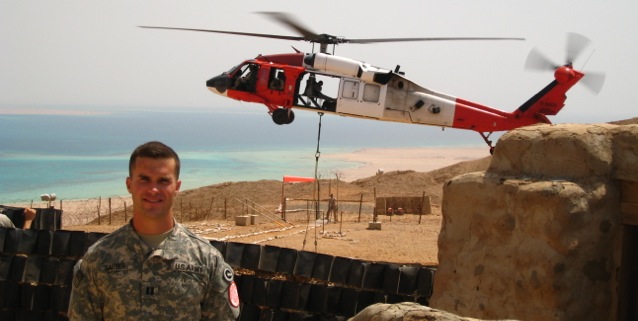
Firstly, I had to clarify exactly what Elliott is doing professionally at the moment. You see, Elliott's fascinating blog, The Uncommon Veterinarian, is thick with international intrigue from a vet med point of view. For example, Veterinary Capacity Building in Post-Conflict Liberia and Wildlife Medicine and Conservation Programs in Belize are enough to make anyone's search histories of kittens and tea just seem like, well, come on people. There's a world outside of your steaming cup of Earl Grey. (Rest assured, I am sitting behind a steaming cup of Earl Grey right now.) Elliott clarified currently, he is working as an Army vet based just outside San Diego, dividing his time between providing clinical vet med coverage to the working dogs of the Navy SEALS and veterinary regulatory oversight to lab animal research. In his spare time, he's working on promoting his newly published novel, The Chimera Sequence. And off we go:

In Elliott's novel, a veterinary medical thriller, we follow the main character, the ex-Special Forces veterinarian Cole McBride, chase the origin of an outbreak from central Africa to expose dangerous implications of international terrorism. Intense stuff. Complex stuff. I asked Elliott how he could possibly start something as ambitious as this.

"Writing a book has been a life-long ambition, but this particular story has taken about three years," he says. "The actual idea for this story and then sitting down and doing it just sort of came to me. I remember exactly when it happened. I was traveling for work and I was in a hotel in the Netherlands on the side of the highway. I thought, well, I've always wanted to write a book so let's see what I can do. So I wrote the first couple of paragraphs, then a few more pages, and then I realized it started getting serious."
Elliott Garber, DVM, and his lovely family

Sigh. He makes it sound so easy. Elliott describes that after his initial leap into novel writing, he had to pause the creative process to actually learn how to write a book. Through some research on the craft, he continued and then finished his very first novel.

"I jokingly say that I wish my life were as cool and exciting as my main character's, but in reality, it's not," Elliott says. Do note, however, that his novel is loosely based on Elliott's job and experiences. "I try to write the type of story that I love to read. I tried to tie in all the stuff I naturally have an interest in and have knowledge of. That made the whole writing process a lot easier because doing some of the background research was enjoyable as it was stuff I was interested in learning about."
Dr. Elliott with a small wooly friend.
Somewhat ironically, Elliott's blog came about as a platform for his novel; however, Elliott felt it started turning into something unique in and of itself -- which is good -- but was taking time away from his novel writing -- which is bad. Many writers, including myself, struggle with two key concepts that Elliott hits on here:

1. How to develop a platform
2. How to not let your platform eat away at your creative space

"A lot of people spend a lot of time talking about writing rather than actually writing."

One thing clever about Elliott's blog is its timelessness. Although he's taking a break from blogging at the moment, Elliott's timeless nature of his topics creates a self-described "immortality" in his online content. "My blog went off into its own thing for a while," he says. "And then I got kind of tired of it and stopped updating because I wanted to finish my book. Then I kind of defeated the whole thing because I didn't really use my blog too much for launching my book. It was a big failure," he laughs. Still, Elliott feels his blog has allowed him to communicate with others with similar interests and he's acquired a few speaking engagements out of it at vet schools. So, not quite the failure, after all. Elliott says he would like to get back to the blog at a later point. I think he should, too. "It's not completely dead," he reassures me. "Just hibernating." Podcasting was another branch of the blog, too - listen here.
Dr. Elliott Garber being a bad ass veterinarian.
The time suck of the online presence for writers is a delicious topic to talk about -- maybe because we all fall victim to procrastination and what more self-rewarding, prophetic way to procrastinate as a writer than to talk about procrastination with another writer. "I had to cut back on blogging," continues Elliott. "I just couldn't do everything at once. I frequently saw on writing forums that a lot of people spend a lot of time talking about writing rather than actually writing."

Truer words were never spoken.

Luckily, Elliott remained unchained by the bonds of NOT WRITING and settled into a pattern. Writing in the evenings, Elliott honed technique and took time for research and learned a little about himself along the way. "One of the things I discovered about myself after the first few months of writing was that I couldn't write fiction very well while I had access to the internet. I was always wanting to look up something -- oftentimes related to the book, so it wasn't completely worthless -- but I would just keep bouncing back and forth between writing and getting dragged down the internet wormhole. Then I discovered this app called Freedom App which lets you turn off your access to the internet universally for a certain amount of time. It's funny to think about having to force yourself to do something that you're choosing to do, but I think for a lot of writers it's a struggle to produce content. But I think there's something about getting to the end that makes it worth suffering through the process."

Elliott then hit on a topic that had recently been discussed at my very own writer's group: as a writer, are you a pantser (meaning, you write by the seat of your pants, unplanned and free flowing) or a planner? Elliott discovered he could write his actual novel more efficiently if he had planned a few chapters in advance. "I would write in the style of telling myself what's going to happen without actually writing it in story form, so once I had that settled in my mind, I could switch to the actual story," he says. "It made a big difference in efficiency. There was no more agonizing over deciding what was going to happen next and then actually writing it."

In the end, with novel finished, Elliott explored the traditional publishing routes first. After getting an agent, he ended up rejecting offers from a few publishers, as he felt he'd ultimately have more control over his own intellectual property (and how it was formatted and sold) if he published independently. "From my own research, I knew the offer the publishers were giving me didn't represent much of an investment at all from the part of the publisher so really they would get it out there without a whole lot of input from me. So I turned those offers down. It has been a lot of work for me this year getting everything ready for independent publishing, so now it's a matter of time to see if it was a good investment doing it this way," he says. "But, I've learned a lot and had a good experience." Elliott writes about his process in more detail here.
Dr. Elliott Garber in India
Prior to The Chimera Sequence, Elliott self-published a short story, called No Dog Left Behind. Also available on Amazon, this was Elliott's first experience with independent publishing and it was a positive one. "I try to tell people there are lots of different ways to do this and it's better having a few people read your work than having it sit on your computer having no one read it at all. It was good training for a bigger project."

In the end, Elliott is extremely positive and open-minded about his own future, both as a veterinarian and as a writer. He acknowledges a sequel to his novel is a possibility, but he's not sure when that might happen. He's still waiting to see how well his first novel will do. "There are also a bunch of other things I like doing and am interested in, so I'm kind of doing other things while seeing how this novel goes. I also have other ideas about other totally unrelated books I'd like to write, too. It's just about making the commitment."

Well, hurry up, Dr. Garber. I want to see what all you can do.

Until next month, dear readers!


Monday, April 20, 2015

The Practice of Painting

We veterinarians are lucky. We have some beautiful patients. For those who are artistically inclined, the animal world presents limitless inspiration. Veterinarians who are talented enough to act as double agents with a stethoscope in one hand and a paintbrush in the other are fascinating to me--a mix of a scientifically trained eye with an intuitive sense of color and balance. Veterinarian and painter Dr. John Fawcett is no exception and I was lucky enough to talk with him about his background, art, and inspirations.
"Two Champions" by John Fawcett, DVM
A DVM graduate from Iowa State University, John steadily built his own practice in Pennsylvania, where he worked for 20 years. "As a kid I always drew. It was a hobby and I just always really liked it," says John. "But I never thought it would be anything more than a hobby."

Understandably, during vet school and later as a solo practitioner, there was little time for painting. A common theme with vets who seek the creative side while practicing, time is the limiting commodity. Prior to hiring associates, John tried to find time to paint in the evenings. "It was a release, more of a relaxation to help relieve stress from the practice."

As his practice grew, John was able to carve increasing amounts of time out of his schedule to pursue his artistic passion. With his wife, John visited a western art show in Arizona. "I was completely enthralled with the genre of western art, which I didn't know a whole lot about at the time," John says. "I pursued that theme and it grew to the point where I got in an invitational show and I got in a gallery. I painted more and more because I got excited about it. I became very passionate about it and it was taking up as much of my free time as I could spare while I was still practicing. It became such that I thought that I really couldn't get any better as an artist unless I put more time into it. So I had to decide if this was going to be just a hobby or more of a vocation for me."
"The Looking Glass" by John Fawcett, DVM
Enter the pivot point: to remain where you are, doing what you've always done (and are good at) or to take a leap of faith to pursue your true passion, which is not without its risks. To remain comfortable and content or to step outside the boundary of your comfort zone for a chance at something with far greater internal reward. Examining character at such a point can illuminate a universe of things about that character. This is not saying leave your vet career for something potentially more illustrious. This is not implying a value or judgement on those who are able to choose, or on what they choose. This is examining something as small as and yet as large as a single life choice.

John explains beautifully how he made his:

"I talked to my stepfather who was a recently retired physician. I was having a hard time trying to decide what I wanted to do. I had built this successful practice and did I just want to throw that all away? But I was so passionate about my artwork. My stepfather posed a question to me that decided my career then. He asked: when you're painting do you think about veterinarian medicine? And I said: no. And he asked: when you're doing surgery, do you think about art? And I said: yes, all the time. So he said, well, there's your decision right there."

So John sold his practice and became a full time painter.

Is this sort of decision easy? Of course not. "To tell you the truth, I had real guilt feelings after I sold my practice because I thought that I wasn't really working. I enjoyed painting so much, it still felt like a hobby to me. It felt like I was just goofing off all the time, even though I was putting in as many hours as I was practicing."

Sometimes, all it takes is the sage observation of an objective spouse to set things right. "My wife kept telling me: this is your profession, get over it."
"Recent Visitors" by John Fawcett, DVM
"I kept my veterinary license for 4 years after I quit practicing," continues John. "I heard that Tammy Wynette was a beautician before she became a country singer and she held her beautician license because if she didn't make it big, she could always go back to being a hair dresser. In about 2000 I let my license lapse and the rest of course is history. I now paint full time and have around five galleries that represent me throughout the country. It worked out well. I'm very fortunate but it's not an easy thing. It's like jumping off a bridge."

As it turns out, a DVM degree is quite helpful when it comes to art. "I've said having a veterinary background is really the longest anatomy lesson an artist could ever have," says John. "Most of my paintings deal with figurative work whether it be humans or animals. I think the veterinary profession has helped me immensely as far as that goes. Horses are such complex animals. Even when I know what I know about their anatomy, they are really a difficult animal to paint and get everything right."
"Born to the Land" by John Fawcett, DVM
As John continues to paint in the genre of western art--the art he fell in love with at the Arizona art show years ago--he brings a story into each piece. His interest in history marries well with his subject matter. "I'm very much interested in history and the relationship of the horse with both the historic and contemporary working cowboy and the native Americans. The history of the horse in North America is fascinating to me."

In addition to his studio in Pennsylvania, John and his wife also have a ranch in Colorado. It's here, out west, where John gathers a lot of his inspiration. He's met local cowboys in the ranching community and has visited various historic ranches. John has also been introduced to Native Americans who have invited him into their tribes. He develops relationships with these people and their horses, and a story soon develops that is then re-created on canvas.
"To the Gate" by John Fawcett, DVM
"There are a lot of different facets to art," John explains. "It's not just picking up a brush and painting something you think is beautiful. To me, it's a history lesson, an anatomy lesson. It's something that can give you beauty as well as make you think about what's going on in the painting. It can be very involved with studying the piece from concept and ideas to the fruition of the painting."

If you cruise through John's collections of paintings, you'll notice predominantly equine watercolors and oils. Although many are in the western theme, there are other working horses exemplified--draft horses and racing horses, for example. In fact, John had the opportunity to paint the 2006 Kentucky Derby winner, Barbaro.
"The Unbeaten Barbaro" by John Fawcett
"I just wanted the opportunity to paint such a magnificent animal," says John. "His owners and I came up with the idea that I would do two paintings, a watercolor and an oil, and they would be auctioned at the Thoroughbred Charities of America (TCA) Auction in Lexington at a fundraiser. The TCA benefits retired racehorses and retired jockeys. This gave me an opportunity to paint a beautiful, strong animal."
"Barbaro" by John Fawcett
John's connections then led him to paint Breeder's Cup winners. "I love painting Thoroughbreds," he says. "But also draft horses, Indian ponies, whatever. They are different types of equine paintings but they are still from the same structure. I'm fascinated with anything equine, really."

As John's artistic talents continue to evolve and improve, some of his works feature greater detail and the capacity to tell a story increases exponentially as a result. "Painting is the same as anything," he says to me. "You're a writer. So it's the same thing that you go through." Idea, research, draft, end product. It's more than a little comforting to realize that the creative process is similar no matter what the format or end product.

Stay tuned for the next blog, Monday, May 4.


Monday, March 2, 2015

The Writing Way

If you think about it, veterinarians are writers in their own right. If we practice medicine, we write medical records; if we do research, we write study protocols and publish our results. We also provide information to the public via webpages, blogs, brochures, magazine articles, and of course books.


But what about writing for pleasure? How often do we do that? (Not enough!)

A few weeks ago I had the pleasure to talk to Dr. Courtney Diehl, a veterinarian in a mixed practice (mostly horses, with some small ruminants, alpacas, and cats and dogs thrown in to keep things exciting) in Steamboat Springs, CO. A practice owner and mother of two, Courtney has found the time to write, and in fact published her first book just a year ago, in February 2014: Horse Vet: Chronicles of a Mobile Veterinarian. I wanted to catch up with Courtney and steal some of her secrets.

"I wasn't very organized at all," Courtney says of her writing process for her book. "I just sort of wrote down the stuff I would think about, or I'd have a run-in with someone and it would trigger my memory and then I would think of all the other stories that relate, so then I'd have to sit down and write them all out."

Horse Vet, in Courtney's own words, is a compilation of tales from the vet's perspective. "Good, bad, and ugly," she says. "A lot of it related to how I dealt with some of the more difficult personalities. We are all aware of the pretty high rate of suicide in our profession and I was actually struggling. Not with suicide, but I was definitely feeling down. I was just trying to feel like where I was at was OK."

Difficult personality types, whether in client (or animal!) form, colleagues, neighbors, or family, can be trying for even the most stoic of souls.

"I was giving these personalities way too much power in my life," Courtney continues. "They would not only wreck my day, but also my month and make me feel bad about myself. Finally, I was like: nobody can make me feel bad about myself. I thought maybe it would also be helpful to some of my colleagues who were dealing with the same things for me to say, hey, I struggle, too, and I still struggle, of course, but here are some of the tools I use to help cope with these people without losing my sanity."

Many scenarios that Courtney writes about contain elements of the dynamic and multifaceted vet-client-patient relationship. There are good days and there are bad days in these relationships and Courtney felt the need to express the full spectrum of what this means. "I wasn't writing to make friends," she says. "I was writing because it was real and that's what we have to deal with. It was time somebody told the story from the vet's perspective and how we make our lives work."

In the end, Courtney found the process immensely therapeutic, keying into one of the greatest benefits of writing for pleasure. On a side note, as I struggle to continue a journal, something I've done since senior year in vet school, I have to cue myself in to the known benefits to personal writing. Look here for a wonderful collection on great writers' reasons for keeping a diary.


"It was cathartic for me in so many ways, just to get it down," Courtney says. "After writing through some of the difficult parts and really looking at myself, I was like: whoa, I really have changed. I've gotten better and stronger and wow. Before, I hadn't really stopped to measure my own progress. Writing this book was instrumental in helping me do that."

After finishing the book, Courtney describes it as having a new best friend, a confidant who knew her strengths and when she faced something challenging, she knew she had faced something similar before, and documented it. The book was saying: don't worry, you got this.

Courtney's target audience was her veterinary colleagues as well as people who were thinking about going into the veterinary world. "I wrote this book to say hey, here's a cross-section of my life as a reality check."

One of the most telling aspects of my conversation with Courtney (telling about the veterinary profession, that is) was when she elaborated on her intended then omitted chapter on finances. "I had a whole chapter in there about numbers and finances," she says. "It was so grim and miserable. I couldn't find a way to make it fun or even readable and I finally gave up and took it out. It was all just lists of numbers and I was like, OK, this isn't working. Unless someone finds a fun way to write about this, no one will want to read it."

Student loan debt, often in the neighborhood of six figures, along with an average salary that isn't increasing comparatively with tuition and a mismatch between the increasing numbers of vets being produced without a workforce that can employ them all are grim realities of the industry. Are these issues that bad that we can't even find a way to express them on paper in a compelling manner?

But enough about the doom and gloom. We're here to celebrate creativity, not roll in self-pity. Go ahead, put your party hats back on.

I like to talk to veterinarians who are writers about the venerable James Herriot because I feel he is the quintessential veterinarian in literature. Read and beloved by millions in a fandom than now spans generations, is it time for a 21st century version? Is that even possible?

Courtney makes an interesting point: it may not be possible. "A modern version of James Herriot, with so many modern concerns like student loan debt, the supplement industry, crazy horse lady stuff... old Herriot would have gone: what in the world? What am I doing here?"
It's all fun and games until someone steps in the cow pie.
"We're just not the martyred figure that he was," she continues. "The man just worked around the clock, had no time off, and worked for peanuts. In this day and age, we just can't be that martyred figure anymore. We have to say: look, we have to charge more and we're worth it and here's why. I think in a firm voice, an advocate for the indebted veterinarian needs to happen."

So, maybe James Herriot did have a few crazy horse ladies to deal with (and sounds like some crazy pig owners and cattle owners and dog owners thrown in there, too) but one thing's for certain: he wasn't competing with Dr. Google. Perhaps the vets of today are to James Herriot what apples are to oranges. Yeah, we're all a little fruity, but there are now fundamental differences in the way we are cultivated and what we are exposed to.

Looking to the future is sometimes the most exciting thing to a writer, with the possibilities just multiplying on the horizon right in front of your eyes. For Courtney, oh yeah--she's got plans. A second book on her vet adventures is two-thirds written and a fiction book about anthropomorphic animals is in draft as well. Courtney has also started a monthly column in the magazine Horse Illustrated called "Vet Adventures." Of course she continues to practice as well, allowing for a continual production line of experiences to draw on for future book chapters, columns, and other venues.

Stay tuned for the next blog, Monday, March 16.